
Saudi Arabia Recognized under CMS Plus for Leadership in Migratory Species Conservation
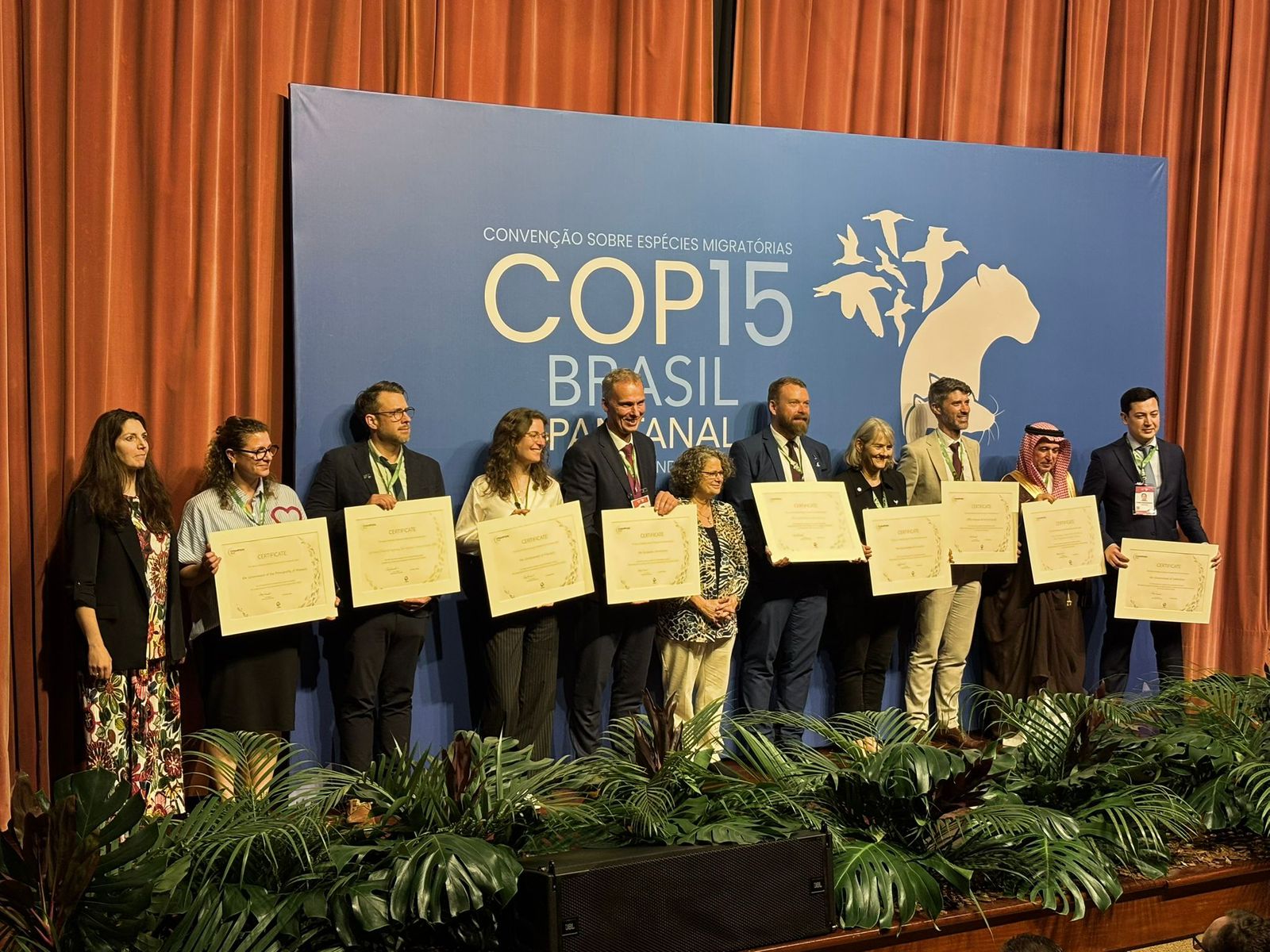
Photo Credit the National Center of Wildlife, Saudi Arabia
The recognition was announced during the CMS “Champions Night,” in acknowledgment of the Kingdom’s contribution to addressing illegal hunting, taking, and trade of migratory species in South-West Asia for the period 2026–2028. It builds on Saudi Arabia’s previous recognition under the CMS Champion Programme at CMS COP14 in Samarkand in 2024.
Saudi Arabia was one of nine countries recognized among 132 Parties to the Convention, in addition to the European Union, reflecting its role in advancing regional and international efforts to conserve migratory species.
Dr. Mohammad Qurban, Chief Executive Officer of National Center for Wildlife, said:
“We value this recognition, which reflects the Kingdom’s continued efforts to protect wildlife and conserve biodiversity, and its role in supporting coordinated action to address threats facing migratory species. Saudi Arabia has focused on strengthening regulations, enhancing compliance and monitoring systems, expanding protected areas, and restoring key habitats to support migratory species along their routes.”
Saudi Arabia has also reintroduced approximately 10,000 animals through 21 breeding and reintroduction programs, contributing to ecological balance and enhancing the resilience of habitats that migratory species depend on. Additional measures include reducing risks such as bird collisions with power lines and electrocution.
The Kingdom continues to support the CMS Intergovernmental Task Force on Illegal Taking, Killing, and Trade of Migratory Birds in South-West Asia through coordination, knowledge exchange, and alignment of regional efforts under the Convention.
Kenana Dahlan
National Center for Wildlife
email us here
Legal Disclaimer:
EIN Presswire provides this news content "as is" without warranty of any kind. We do not accept any responsibility or liability for the accuracy, content, images, videos, licenses, completeness, legality, or reliability of the information contained in this article. If you have any complaints or copyright issues related to this article, kindly contact the author above.
