

Your top news on business and economy
Provided by AGP
Future of Smart Cities: Role of a Custom Modular LED Street Light Company in Intelligent Lighting
Street Lights Are No Longer Just Street Lights — The Infrastructure Paradigm Shift
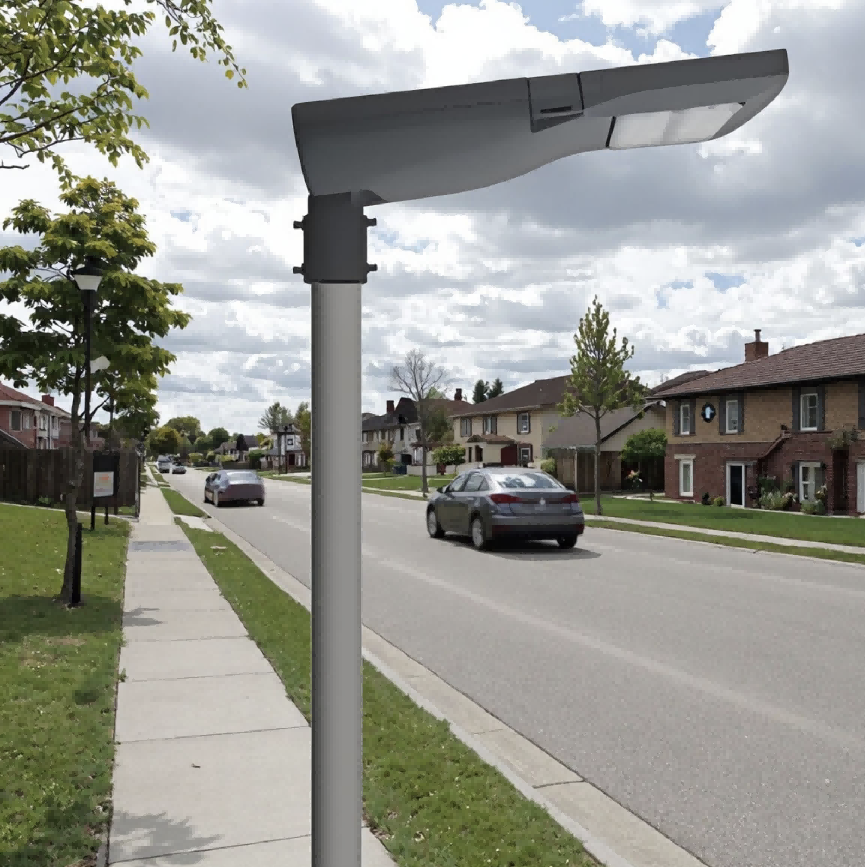
Modern urban development frameworks, across Asia, Europe, and the Middle East, increasingly treat street lighting poles as multi-function platforms. Beyond primary illumination, these structures now host environmental sensors, surveillance cameras, EV charging modules, Wi-Fi access points, and real-time traffic monitoring systems. Numerous cities have already begun deploying integrated pole systems at district scale.
This convergence fundamentally changes the procurement calculus. A city department selecting a street light today is simultaneously choosing an IoT gateway architecture, a long-term maintenance cost model, and a 15-to-20-year infrastructure commitment. Consequently, the hardware design philosophy — above all, the choice between fixed-spec and modular construction — carries consequences that reach well beyond the initial installation budget.
Why Modularity Is the Design Principle Smart Cities Cannot Compromise On
Modular design in street lighting solves a problem that fixed-spec fixtures simply cannot: the need to evolve hardware without replacing entire installations. A modular fixture allows field technicians to swap optical modules, upgrade LED drivers, or replace control boards independently. This capability dramatically reduces both downtime and lifecycle maintenance costs for city infrastructure departments.
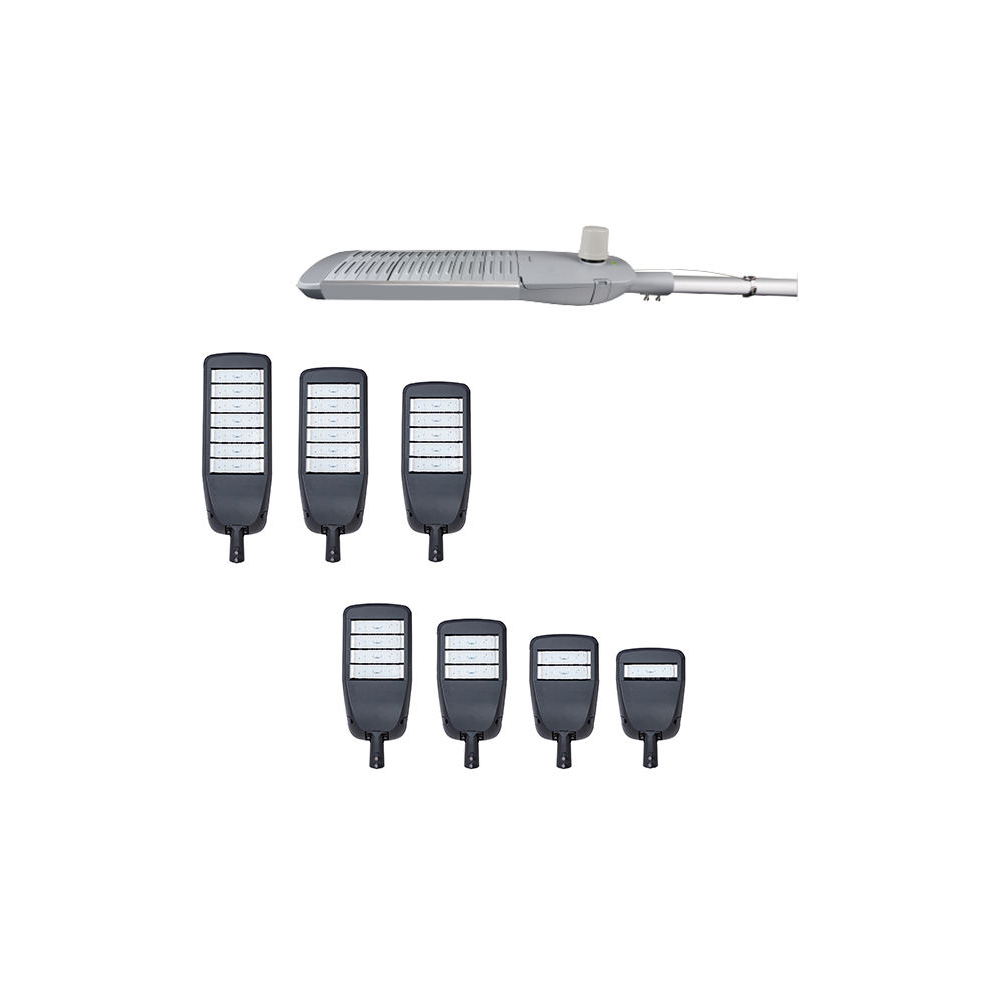
The engineering logic runs deeper than maintenance convenience. Modular architecture also enables a single product platform to scale across radically different output requirements. Starslighting's ST-S010, for instance, spans 50W to 300W within one modular framework. Its flat honeycomb thermal structure optimizes heat dissipation across the full power range. Tool-free disassembly further simplifies on-site servicing — a detail that carries real operational value when multiplied across thousands of fixtures in a live urban network. Moreover, the adjustable mounting shaft supports 90° and 180° rotation (plus or minus 15°), accommodating diverse pole configurations without site-specific custom engineering.
The Intelligence Layer — How Adaptive Controls Turn Hardware Into Urban Data Infrastructure
Hardware modularity creates the structural foundation. The control layer, however, determines whether a street light functions as a passive fixture or an active urban intelligence asset.
Modern smart street lighting relies on a layered control stack. At the base level, 0-10V dimming interfaces allow output adjustment in response to real-time conditions. Time-based scheduling reduces energy consumption during low-traffic periods. Ambient light sensors automate output transitions at dawn and dusk. At the network level, IoT-compatible remote monitoring platforms aggregate performance data, generate predictive maintenance alerts, and flag faults before failures occur.
Starslighting (Changzhou Starslighting Technology Co., Ltd.) integrates all these control layers into the ST-S010 platform — covering light sensor, time control, 0-10V dimming, and IoT control compatibility. This combination allows city managers to operate large fixture networks from a centralized dashboard rather than through reactive field inspections. Over a 50,000-hour product lifespan, the operational cost difference between reactive and predictive maintenance models is substantial.
Multi-Scenario Optical Adaptability — One Platform, Every Urban Environment
City-scale deployments present a photometric challenge that single-spec products cannot resolve. A highway interchange demands narrow asymmetric light distribution to maximize pole spacing. A pedestrian promenade requires wide, glare-controlled coverage at lower mounting heights. A tunnel calls for uniform horizontal illuminance with minimal dark zones. Sports field perimeters need high-power, targeted output with controlled light spill. Each environment imposes distinct standards — yet procurement teams consistently seek to minimize the number of product families across a city-wide program.
Changzhou Starslighting Technology Co., Ltd. addresses this through genuine optical flexibility within the ST-S010 series. Available beam angles cover 60°, 90°, 120°, T2, T3, and T4 distributions. The CCT range spans 2700K to 6500K, supporting both warm-toned heritage districts and cool-toned industrial zones. Luminous efficiency reaches 140 to 180 lm/W depending on configuration. Bracket compatibility covers 50mm and 60mm diameters. Together, these variables allow a single procurement framework to span highways, tunnels, community roads, waterfront pathways, industrial parks, and pedestrian overpasses — without demanding separate product specifications for each application type.
From Fixture Supplier to City-Scale Lighting Partner — What the Relationship Actually Requires
A city-scale lighting program rarely concludes at product delivery. Phased rollouts require staged logistics coordination. Multi-zone commissioning demands technical teams who understand both electrical infrastructure and control software integration. Maintenance staff need onboarding on system operation and basic fault diagnosis. Long-term spare parts availability determines whether a fixture network remains operable beyond its initial warranty period.
This is where the distinction between a transactional product supplier and a genuine project partner becomes commercially decisive. Starslighting operates a 3,800 square meter manufacturing facility with an annual production capacity of 200,000 sets. A dedicated technical team of more than five engineers supports OEM and ODM customization across optical configurations, driver specifications, control system integration, and surface finish options. A separate quality control and after-sales team manages post-delivery support. In-house testing infrastructure — including an integrating sphere, Distribution Photometric Darkroom, aging test chambers, and advanced SMT pick-and-place production systems — enables third-party-verifiable quality data rather than reliance on supplier-reported figures alone. Documented project deployments span Romania, Poland, Croatia, and Algeria, covering road, tunnel, sports field, and industrial facility applications.
What City Planners and Procurement Teams Should Evaluate Before Committing to a Smart Lighting Platform
Selecting a smart street lighting platform involves layered due diligence that product catalogues alone cannot satisfy. Several evaluation criteria consistently separate capable suppliers from those who underdeliver at project scale.
First, control protocol compatibility: the fixture's dimming interface and IoT architecture must align with the city's existing or planned urban management platform. Second, certification breadth: deployments across multiple jurisdictions require CE, RoHS, ERP, SASO, IEC, and CB documentation — gaps in any of these create regulatory exposure during installation or customs clearance. Third, thermal performance documentation: a fixture rated for -40°C to 50°C operation should carry verifiable test data, not just a stated specification. Fourth, warranty structure: a five-year coverage commitment carries weight only when tied to a manufacturer with direct production control and accessible spare parts logistics. Fifth, track record: verifiable multi-environment project references reduce the risk inherent in any new supplier relationship.
Starslighting holds CE, CB, RoHS, ERP, ISO, IEC, NOM, and SASO certifications across its street light range. The company has supplied municipal and infrastructure projects across more than 30 countries since its founding in 2016. For city planners and procurement professionals evaluating smart lighting suppliers, that combination of technical breadth, manufacturing scale, and international project experience provides a meaningful and verifiable baseline for assessment.
For detailed product specifications, project documentation, and procurement consultation, visit https://www.czstarslighting.com/.
Changzhou Starslighting Technology CO.,LTD.
Changzhou Starslighting Technology CO.,LTD.
+ +86 17305192737
info@czstarslighting.com
Visit us on social media:
X
Legal Disclaimer:
EIN Presswire provides this news content "as is" without warranty of any kind. We do not accept any responsibility or liability for the accuracy, content, images, videos, licenses, completeness, legality, or reliability of the information contained in this article. If you have any complaints or copyright issues related to this article, kindly contact the author above.
